
Focus Media
  1. Home
  2. 2026 civic interviews
  3. Lenny Zhou 周楠

Focus Media · 2026 Civic Election Interviews

Lenny Zhou 周楠Interview collection

Vancouver city councillor and 2026 council candidate · ABC Vancouver

In the main interview, personal profile and city-life discussion, Lenny Zhou reflects on his journey from international student to councillor, family life and day-to-day municipal work. Topics include public safety, property taxes and permitting. Policy and performance claims remain attributed to the guest, with official sources available for further reading.

Hosted by Sarah Yu 余佩珊 · Produced by Focus Media 聚焦传媒

3 episodes

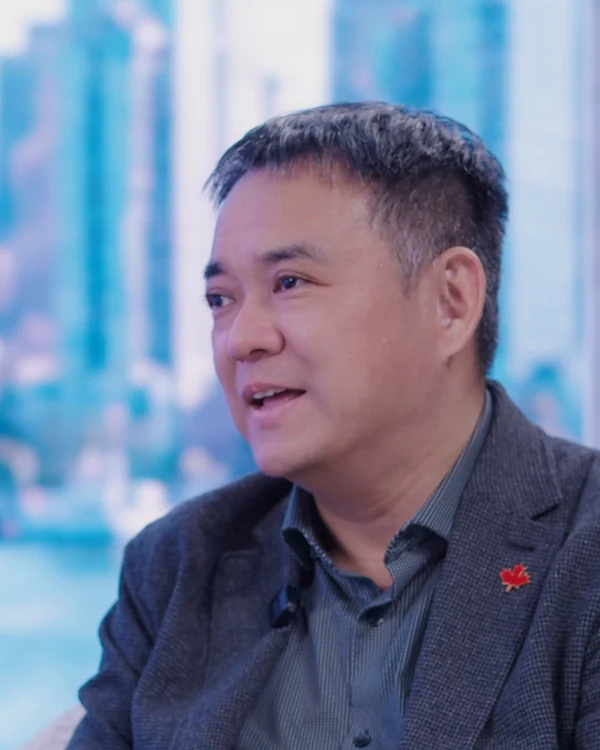
Lenny Zhou 周楠 in the Focus Media interview
Lenny Zhou 周楠

Films · Chapters · Transcripts

Watch the conversations

Watch an episode or jump to a topic using its chapter links.

Main interview

Lenny Zhou (周楠) | Ep. 1: For My Child, and for This City | 2026 Vancouver Civic Election Interview

Video imagery, cover titles and statements shown are from the original programme.

Lenny Zhou discusses his reasons for seeking re-election, his move from work at a healthcare institution to council, family life and municipal work. Descriptions of his work and policies are presented as his statements.

Browse chapters8 topics
  1. 0:00Opening excerpts
  2. 0:28Seeking re-election
  3. 2:04From work at BC Children’s Hospital to council
  4. 3:36A councillor’s working day
  5. 3:59Family and children
  6. 4:50Discussing City Hall Express
  7. 5:52Roles of council and the city manager
  8. 8:15Chinese names on ballots
Read the English transcriptExpand full text

The following transcript is supplied from the episode subtitles and preserves the conversation. It is not an editorial fact-check.

Lenny Zhou (周楠) | Ep. 1: For My Child, and for This City

https://youtu.be/d9gQTR-9iSg

(Transcript from the episode's English subtitles; speakers not labelled. Host: Sarah Yu.)

[0:00] Highlights

In 2021, Ken Sim's team approached me, hoping I'd run for city council. At the time, I was reluctant. Why? Because I'd be giving up a lot. Back then, I'd just had a baby, my one and only child. We'd only just had our baby in November 2021. I also worried about my child growing up in Vancouver: later on, could they find a better job? Could they afford a home? Would they face racial discrimination? So actually, I was moved by his sincerity, and in 2022, I decided to step up and join him in running for Vancouver city council.

[0:28] Running for re-election

Lenny Zhou, as an ABC Vancouver city councillor currently in office, running for re-election this year, how are you feeling during this campaign? Well, here's how I see it. Over the past four years, I think Vancouver, under ABC Vancouver and Mayor Ken Sim's leadership, has in many areas actually made some very good progress. For example, the city is safer now. That's because we invested in public safety, so the Vancouver Police Department, for the first time in 15 years, got adequate funding. And what was the result? Vancouver's violent crime is at its lowest in 23 years. There's real data on that. And crime rates across the board, in almost every neighbourhood, are going down. So that's been fairly good on that front. Another thing is affordability, which is also one of our signature policies. I saw a news story saying that this year, Vancouver really did manage not to raise taxes. Yes. This year, Vancouver's property tax increase is zero. And we've promised that after this year's election, if we're elected, next year's property tax increase will again be zero. Because when we talk to residents, affordability is the biggest issue. If you leave it to us at City Hall— of course, affordability is very complex— say, asking City Hall to solve the trade dispute with the US, that's impossible. It's not realistic, right? But we use the tools in our toolbox to support affordability. So property tax is a very important issue. And we managed it without cutting any core services. We achieved a zero property tax increase. We did all of this with our residents' wallets in mind. This year, out of over a thousand cities in Canada, only three had a zero property tax increase. But Vancouver is the biggest. For a city of Vancouver's size, we're the only one. So all of this is for our residents.

[2:04] From BC Children's Hospital to council

What you've achieved over these four years. Yes. I looked into your background. You've always been— actually, before this you were at BC Children's Hospital, Yes, in management. Right. So you were in healthcare management, and a top student as well. No, no, I wouldn't say that. So what twist of fate led you into politics? Well, I've always been interested in politics. So after I came to Canada, finished my studies and stayed on to work, I'd been volunteering all along, supporting other candidates, helping them campaign. Then in 2021, Ken Sim's team approached me, hoping I'd run for city council. At the time, I was reluctant. Why? Because I'd be giving up a lot. Back then, I'd just had a baby, my one and only child. We'd only just had our baby in November 2021. At the time, I felt I'd have to give up far too much, and my child was still so young. But later, I was truly moved by Mayor Ken Sim's vision. He really wanted to make this city better. And at the time, Vancouver really was facing a lot of problems in the post-pandemic era, like racial discrimination, like public safety, and also the issue of affordability. I also worried about my child growing up in Vancouver: later on, could they find a better job? Could they afford a home? Would they face racial discrimination? So actually, I was moved by his sincerity, and in 2022, I decided to step up and join him in running for Vancouver city council. So over these four years, do you feel you've made sacrifices, or felt a sense of accomplishment? Both, of course: sacrifices and a sense of accomplishment. I believe this city, in my view, has become better, and that's a very good thing. Because a better city isn't just for my child, it's for everyone.

[3:36] 15-hour days

In these four years in office, how many hours a day do you work on average? Honestly, the hours are very long. No exaggeration: I work 15 hours a day, at least six days a week, sometimes seven, with no rest at all, because weekends are even busier, with all kinds of events to attend. My longest stretch, I remember, was 32 days in a row without a single day off, working 15 hours a day.

[3:59] A young child at home

And with a young child at home, how do you handle things with your family? You'd have to ask my wife. Because she does complain a lot, often because I really don't get to see our child. Yes. But I also tell her that what we're doing, all of this, is to make the city better, and it's also for our child, right? So I think one day, when our child grows up, they'll understand. You're one of the few, representing us Chinese Canadians from mainland China, who've been elected to city council. And your wife must be, with you, from mainland China, in politics here, actually very proud of you at home. You'd have to ask her. Honestly, I'm not a very good... So in that sense, I owe them. But you also carry the hopes of many of us from mainland China, right? And there's hope; they also hope that while you're in office, in your four years in office, you can get more of a voice for us Chinese Canadians.

[4:50] City Hall Express

Yes, that's true. That's what I've been doing these past four years. Because before, I felt that City Hall and our communities, especially the Chinese community, were disconnected. People didn't know what City Hall was doing. So after I was elected, I started what's called the “City Hall Express” program, to help people learn some political basics, and at the same time, tell everyone about some of what City Hall is doing, and send out updates. And through this platform, I also gather people's feedback, and bring that feedback to city council, where it becomes an important factor in our policymaking. So I've been doing this for the past four years. Especially on issues that our Chinese community cares about, like property tax and drugs, I've listened to what people have to say, and helped them make their voices heard. So on that front, over the past four years, I think, as a start, we've done well. But you're the best person to speak to this, because you have spent these four years involved in a lot of the government's business. Because the rest of us don't really know what it's actually like once you're inside, how the work flows. Could you walk us through it, or share some stories about how you've pushed things forward?

[5:52] Council as a board, the city manager as CEO

Sure. If you compare the city government to a company, city council is like the company's board of directors. The mayor is like the chair of the board, and we're like the board members. We set the city's overall policy direction, the major policies, the direction of the city's growth. But most importantly, there's another key position, called the city manager. The city manager is like the CEO of the company, or of the city. He has to execute. So this role comes down to understanding council's intent, the direction council wants to go, and then making it happen. It's a very key position. The CEO really plays a crucial role. So there's only one CEO? Right, only one. Just one city manager. That must be exhausting, taking all of your voices, your council's direction, and all the rules, and carrying them all out. He has to lead the whole team. Exactly. So last year, we brought in a new city manager, a new person in the role, so he can better help carry out these policies. So I believe this... What's the CEO's background? He's basically been a city manager in other cities before. He has prior experience. Yes. He has other experience and knows city operations better. So he's the one who puts our policies into practice. That position is very, very important. So I think that after we changed city managers last year, he can better help us deliver on the city's direction and major policies. So going forward, I think a lot of it, we're hoping he'll carry out. Also... When you changed CEOs, was it very difficult? Of course. Because actually, not many people can do this job, this role. Because this job is very, very hard. It means coordinating all the departments, especially in such a huge government. It's not like some small city. The City of Vancouver, we have 10,000 employees, nearly 10,000. So it's a very, very large city. Every department needs to be coordinated and briefed, and has to understand clearly: this is council's priority, the policy we're prioritizing, so carry out this one, not that one. So how to coordinate all of this so the whole city runs more smoothly—that's a very important responsibility he faces. So does the CEO often come out and speak publicly? Or is it mostly you, the councillors and the mayor, who speak for the city? We're the ones speaking out front. We set the city's big strategic policies and overall direction, but he carries it out in the background. So what people see out front is probably mostly us politicians, right? But behind the scenes, it's mostly the whole management team.

[8:15] Chinese names on the ballot

A while ago, I remember seeing a news post from you about adding, on the ballot, your own name in Chinese. And before that, this may have been opposed, and then you actually took it to the Supreme Court, was it? The BC Supreme Court. The BC Supreme Court. Then, after a hearing, it was approved. That's great. For us Chinese Canadians, winning more rights is a really big step. What I'd like to know is, court processes usually take a long time for a single case. Why did you get a result so quickly? Right. That's because under the rules, this was an urgent case. Vancouver had to print the ballots at the time, so there had to be a ruling by that Friday. So it was that Friday afternoon that the BC Supreme Court judge made the ruling. So it was an urgent situation that had to be handled and heard urgently. So I think this is very good not just for our Chinese community but for all minority communities. Especially for us first-generation immigrants. We weren't born in this country. We already had our names where we came from. If we want a new generation of immigrants to take a better part in politics, and in public service, then we should create better conditions for them. Before, in the 2018 election and the 2022 election, everyone felt it didn't matter, and it just fizzled out. That's why it dragged on until now. If we don't fix this, then in the next civic election, in 2030 and beyond, we'll still run into the same problem. So I felt we couldn't put this off any longer. We had to get a clear answer. For our next generation, for our future minorities, first-generation immigrants in the Chinese community, we need to create good conditions to take part in politics. So I felt that on this, I had to stand up for everyone's rights. And the good thing is, I think the judge also delivered a fairly good ruling. And this, I think, is something that changes Vancouver's whole political system, its electoral system. I believe for our young people in the future, first-generation immigrants coming to Canada, getting into politics in Vancouver, it creates good conditions and makes things easier.
Profile

Lenny Zhou (周楠) | Ep. 2: From Beijing to City Council | 2026 Vancouver Civic Election Interview

Video imagery, cover titles and statements shown are from the original programme.

In this profile, Lenny Zhou recalls studying abroad, his reasons for entering politics and his day-to-day work in office. He also discusses names on ballots and personal identity. These experiences are presented as his account.

Browse chapters6 topics
  1. 0:00Studying abroad after leaving Beijing
  2. 1:29Reasons for entering politics
  3. 2:36Day-to-day work in office
  4. 2:59Chinese names on ballots
  5. 3:44Personal identity and pressure
  6. 4:17Reflecting on time in office
Read the English transcriptExpand full text

The following transcript is supplied from the episode subtitles and preserves the conversation. It is not an editorial fact-check.

Lenny Zhou (周楠) | Ep. 2: From Beijing to City Council

https://youtu.be/i5axtOehnVI

(Transcript from the episode's English subtitles; speakers not labelled. Host: Sarah Yu.)

[0:00] A student from Beijing

My story, anywhere in the world, in any other country, it couldn't happen. Only in Canada, only in Vancouver, which is so inclusive. Where are you from? I'm from Beijing. From Beijing. You've been here, I'd guess, 20-plus years? Right. I came abroad as a student. 20 years ago, I came to Vancouver as an international student. Back then—can you tell us? Back then, you'd graduated... just graduated over there, right? Just graduated in China? Yes. I did my undergrad in China. Then your situation is similar to mine. Yes, very similar. I also finished university in China, and then came here to study. Yes, it was the same for me. In China, after finishing my undergrad, I came here for grad school. I did a master's, and after that, I stayed here. I also came as an international student to an unfamiliar environment, didn't know anyone, and back then my English wasn't good either. and then, step by step, up to now, as a Vancouver city councillor. Your English must be very fluent now. Yes, well, that's now. It's been so many years, after all. But I'm just saying, my experience— then later, through our democratic system, being elected, in Vancouver's history, as the first city councillor from mainland China. You're the first, right? The first, the first. From the mainland. I was thinking about this yesterday, too. I also wanted to ask you: do you count as one of several, or the only one? In Vancouver's history, there have been 13 in total, counting me: 13 Chinese Canadian city councillors. But the previous 12 all had Hong Kong or Taiwan backgrounds. So I'm really grateful to Vancouver and Canada. It's this diversity and inclusion that made my story possible. So I'm also especially grateful to those who, before me, came to this city, came to this country. I feel that without our Chinese immigrants, generation after generation, working hard, I wouldn't be where I am today.

[1:29] Why politics

So what twist of fate led you into politics? Well, I've always been interested in politics. So after I came to Canada, finished my studies and stayed on to work, I'd been volunteering all along, supporting other candidates, helping them campaign. Then in 2021, Ken Sim's team approached me, hoping I'd run for city council. At the time, I was reluctant. Why? Because I'd be giving up a lot. Back then, I'd just had a baby, my one and only child. We'd only just had our baby in November 2021. At the time, I felt I'd have to give up far too much, and my child was still so young. But later, I was truly moved by Mayor Ken Sim's vision. He really wanted to make this city better. I also worried about my child growing up in Vancouver: later on, could they find a better job? Could they afford a home? Would they face racial discrimination? So actually, I was moved by his sincerity, and in 2022, I decided to step up and join him in running for Vancouver city council. So over these four years, do you feel you've made sacrifices, or felt a sense of accomplishment? Both, of course: sacrifices and a sense of accomplishment. I believe this city, in my view, has become better, and that's a very good thing. Because a better city isn't just for my child, it's for everyone.

[2:36] 15-hour days

In these four years in office, how many hours a day do you work on average? Honestly, the hours are very long. No exaggeration: I work 15 hours a day, at least six days a week, sometimes seven, with no rest at all, because weekends are even busier, with all kinds of events to attend. My longest stretch, I remember, was 32 days in a row without a single day off, working 15 hours a day.

[2:59] Chinese names on the ballot

A while ago, I remember seeing a news post from you about how, on the ballot, you added your own name in Chinese. And before that, this may have been opposed, and then you actually took it to the Supreme Court, was it? The BC Supreme Court. The BC Supreme Court. Then, after a hearing, it was approved. That's great. For us Chinese Canadians, winning more rights is a really big step. So I think this is very good not just for our Chinese community but for all minority communities. Especially for us first-generation immigrants. We weren't born in this country. We already had our names where we came from. If we want a new generation of immigrants to take a better part in politics, and in public service, then we should create better conditions for them.

[3:44] The pressure of being first

How do you motivate yourself every day? I think, actually, the pressure I put on myself is pretty high. The pressure I put on myself, because since I'm the so-called first city councillor from mainland China, if I don't do a good job, then maybe in the future, for us Chinese Canadians, especially Chinese who came from the mainland, especially first-generation immigrants, getting into politics would be very hard. So I have to... From my point of view... Because you're the first. And as the first, you also have to be the benchmark. Right. So I put a lot of pressure on myself to be a good role model. And you really have done a great job already. No, there's still a lot I need to do better. I'd only give myself... if 10 is a perfect score, I think I'd only give myself a 7.

[4:17] Four years of grey hair

In these years, especially these four, do you feel it's taken a physical toll on you, or not? A lot of people say that in the past— four years ago, my hair was still black. Now, there's lots of grey hair. I look older. A lot of people don't know I was born in the '80s. You were born in the '80s? We should shake hands. I was born in the '80s too. Yes. Right. So there probably is that kind of effect. But I think making the city better now, it's worth it.

City affairs

Lenny Zhou (周楠) | Ep. 3: Safe on Our Streets | 2026 Vancouver Civic Election Interview

Video imagery, cover titles and statements shown are from the original programme.

In this city-affairs discussion, Lenny Zhou recalls an encounter with an older resident and discusses public safety, property taxes, renovation permits and downtown roads. Figures and assessments of policy outcomes are attributed to the guest.

Browse chapters5 topics
  1. 0:00Recalling an older resident collecting bottles
  2. 1:27Public safety and street attacks
  3. 1:56Property-tax policy
  4. 2:22Renovation permits
  5. 3:24Downtown road planning
Read the English transcriptExpand full text

The following transcript is supplied from the episode subtitles and preserves the conversation. It is not an editorial fact-check.

Lenny Zhou (周楠) | Ep. 3: Safe on Our Streets

https://youtu.be/KKqD33782hc

(Transcript from the episode's English subtitles; speakers not labelled. Host: Sarah Yu.)

[0:00] The woman who collected bottles

If City Hall were to do just one thing, it should be making our residents feel safe walking down the street. Over these four years in office, what has been especially memorable for you? Any little stories like that? Wow, so many. Actually, I think the most memorable thing for me is talking with residents. For example, one time I was really moved. It was at a seniors' home in Chinatown, talking with the seniors. One of them told me, in tears, back when I'd just taken office, she made a living collecting bottles. Every morning she'd go collect bottles, then sell them to cover her living costs. She told me that one morning, she got up early, out the door at 7, collected bottles all day, and on her way back, in the Downtown Eastside, she ran into some people, probably drug users, who came at her waving weapons, knives and such, forcing her to hand over the bottles she'd collected all day. So with no choice, this old lady just handed them over. But with no money, how could she live in a seniors' home? Yes, the Downtown Eastside has some provided for low-income seniors, seniors' homes. So at the time, I was really moved. She was crying her eyes out, and told me, feeling so wronged, how after a whole day's effort, an old woman had collected these bottles, only to have to hand them over that evening. It was such a pitiful thing. But around last year, when I saw her again, she also felt that public safety was getting better. So she told me she could finally go out and collect bottles without worry, and get on with her own life at the seniors' home. So that really moved me, because it's true: the policies we make can affect everyone in the community.

[1:27] Random street attacks

So, over the next four years, what are your future plans? Right. I think the key thing for policy going forward is still public safety. Public safety has gotten better over the past while, a lot better. When we first took over, back then, in 2022, on Vancouver's streets, on average, every day, there were five random attacks. Random attacks. That's really frightening. So anyone could become the victim of a random attack like that. That number has now dropped to under one. Under one is still quite a lot. I want to get that number down to zero.

[1:56] A 0% property tax increase

I saw a news story saying that this year, Vancouver really did manage not to raise taxes. Yes. This year, Vancouver's property tax increase is zero. And we managed it without cutting any core services. We achieved a zero property tax increase. We did all of this with our residents' wallets in mind. This year, out of over a thousand cities in Canada, only three had a zero property tax increase. But Vancouver is the biggest. For a city of Vancouver's size, we're the only one.

[2:22] Renovation permits

Actually, another way City Hall supports small and mid-sized businesses is cutting red tape, making the city more efficient. And this is something we've been doing over the past few years, right? Like, over the past four years, we've cut 2,000 different regulations of all kinds, rules for small and mid-sized businesses, over 2,000 pages. I heard that before, say you wanted to rent a place and then renovate it, you had to get through City Hall's... the City of Vancouver's approval for the renovation. Very long waits. A year or two. How long does it take now, roughly? Right, the exact numbers now... as I recall, for renovation permits, you should be able to get one within three weeks. Three weeks. Within three weeks. Because you cut over 2,000 pages. Over 2,000 pages. And we use technology to speed up the approval process, right? Getting the approvals department to focus more on customer service, rather than creating hassles for them. You'll be using some AI assistance to help with approvals. AI assistance. It's interesting: before, approvals were all still on paper. When I went over to the approvals and planning departments to take a look, it was all rolls and rolls of paper. At least now it's all online. And the next step is to use AI tools, to have AI help us review the whole approval process and speed it up.

[3:24] Why downtown has no freeway

I used to go downtown a lot too, since I went downtown for school. And I'd often see those big buses. They're actually really big and wide, but the roads are very narrow. And I'd see the cars up ahead. Actually, whether you're driving a regular car or whatever, you're right up against the bus, maybe just a few centimetres apart. So dangerous, driving like that every day. And I feel like, with Vancouver's roads, is there any chance of widening them? Vancouver is one of North America's few big cities with no freeways downtown. Because actually, the space to build them isn't enough either. Actually, the earliest, the very early immigrants were also opposing Vancouver's freeway project. Why? Damaging the natural environment? The environment was one issue. The other was the damage to all of Chinatown, which would be huge. At Dunsmuir, there's a viaduct right downtown, the stretch from Chinatown into the city centre. That viaduct, our old Chinese community, back in the '70s, opposed it together, so it was never completed. Of course, just imagine: if back then the freeway had been built, all of downtown, a lot of buildings might be gone. The impact on Chinatown would have been huge. So these are some issues from Vancouver's history. So in downtown Vancouver, Dunsmuir Street is actually an unfinished viaduct. If you know the history, it's a really interesting bit of history. But this was also our old Chinese community fighting for their own rights. I'd like to say thank you. Thank you, Sarah. Thank you, Focus Media. Thank you to all our viewers. Thank you, everyone.

About the interviews

What is Lenny Zhou’s status in the 2026 election?

As of October 12, 2026, Lenny Zhou is a Vancouver city councillor and is listed by the City as an ABC Vancouver candidate for council in the 2026 election. Consult the City’s official information for current details.

How do the three videos differ?

This page includes the main interview, a personal profile and a city-affairs discussion. Topics include personal experiences, family, municipal work, public safety, property taxes and permitting. Policy and performance assessments are Lenny Zhou’s views expressed in the interviews.

What language are the interviews in?

The interviews have Mandarin audio, with Chinese transcripts, English translations and downloadable captions in both languages. The English page and transcript do not indicate an English-dubbed video.

Sources and programme notes

Views expressed are the guest's own and do not represent Canada Focus Media. Focus Media welcomes interviews with candidates of all backgrounds.

To report a name, translation or link error, contact Focus Media. info@focusmediainc.ca