Episode 1
Not Talking Isn't an Illness
Video imagery, cover titles and chapter names are from the original programme, with Mandarin audio.
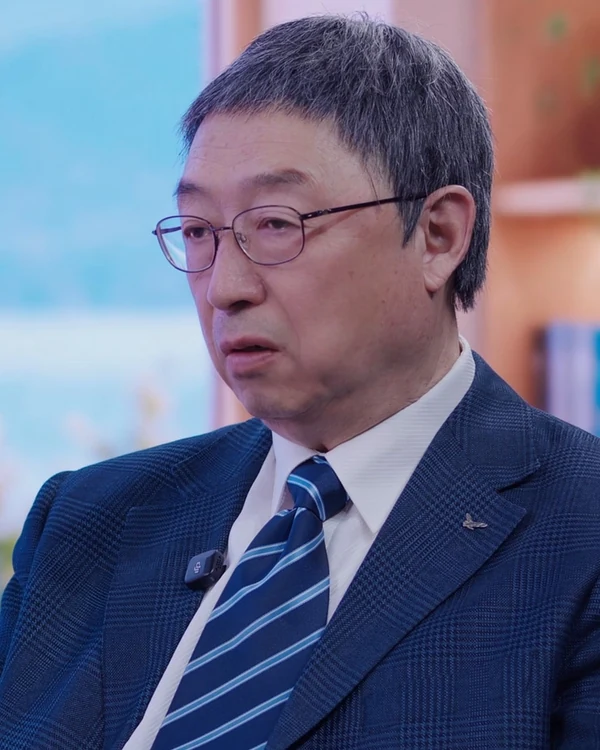
Chen recalls studying abroad, immigration and family experiences, then discusses school adjustment, language barriers and inclusion for newcomer children, and his reasons for running for school trustee. The title and statements about autism come from the original programme, not clinical conclusions on this page. Child development and diagnosis require qualified professional assessment.
Browse chapters11 topics
- 0:00Highlights
- 0:17The CanWest Party
- 1:28A grassroots party
- 2:13First time on the provincial stage
- 3:11Studying abroad in 1998
- 5:13Running for school trustee
- 5:42Quiet doesn't mean autistic
- 7:09His daughter's lunch
- 7:44“If you don’t understand sharing, leave”
- 9:30Why school trustee
- 11:10Winning isn't what matters
Read the English transcriptExpand full text
The following transcript comes from the supplied episode subtitles and preserves the conversation. It is not an editorial fact-check.
Lawrence Chen (陈卫平) | Ep. 1: Not Talking Isn't an Illness | 2026 BC Election Interview
https://youtu.be/aDexWq_rUKs
(Transcript from the episode's English subtitles; speakers not labelled. Host: Sarah Yu.)
[0:00] Highlights
Actually, it's not an illness. It's not an autism issue. It's that society hasn't been accepting of them. Didn't I pack you a lunch? She said other students took it all. She couldn't eat a single bite. If you don't understand sharing, then leave this school.
[0:17] The CanWest Party
Lao Chen, thank you so much for coming to our studio today. I hear you've founded a new party. What's it called? Our party is called the CanWest Party. Could you briefly introduce your party's platform to our viewers? As for when our party was founded, it was actually back in 2007. Yes. Back then, the name we started with wasn't this one. It was called the Nation Alliance Party. After that, we ran in several elections. Provincially, we're what's called a provincial party. One condition for approving a provincial party is that in every provincial election, you must put forward your representatives— a few candidates—to run. If you skip even one election, then your party gets closed. Right, closed. So a few years ago, after I stopped running, we were closed. Then this February, we revived the party. But when we revived it, we couldn't use the old name anymore. So we came up with a new name: the CanWest Party.
[1:28] A grassroots party
So what you want to tell viewers is that its political platform is basically the same. Right. We've never changed. Then and now, basically, one thing holds: we're a grassroots party. That is, our members and all our supporters are ordinary citizens, ordinary people. And the vast majority are first-generation immigrants. That's our profile. Because we define ourselves as a grassroots party, when we run for office, we, as candidates, are representatives of the people, right? You represent the people of your riding. You listen to them, and then you take their voice to the provincial government, or to city hall. So our platform is bottom-up, not top-down.
[2:13] First time on the provincial stage
Because this provincial election is the first time our party is showing itself to the public. We're the CanWest Party, a provincial party, and we hope that through this provincial election, more people will get to know us. Lately I've talked a lot about the party, and people had no idea. Nobody promotes us. People only knew my old Nation Alliance Party. The CanWest Party, they'd never heard of. As I recall, you were only founded recently, right? In the Richmond civic election too, a lot of people didn't know my name. They just knew me as Lao Chen. Wei Ping Chen. But in elections, I use Lawrence Chen. Because in elections there are no Chinese characters, right? So Lawrence Chen is my campaign name. My name is Wei Ping Chen. And for school trustee this time, it's the same name. And provincially, you're running in Richmond Centre. Yes. Because that area has lots of Chinese residents— a high proportion of Chinese, lots of middle-class condos in that area.
[3:11] Studying abroad in 1998
Lao Chen, I'd like to know what year you came to Canada. Before that, did you study abroad? In another country? Yes, I went abroad to study in 1998, first to Australia. At the time I did a master's degree, an MBA, with two majors: one was finance, the other business management. My undergrad was in China, at Dalian Maritime College— as it was called then, now Dalian Maritime University— for my bachelor's. Then in Australia, after finishing my master's, I immigrated here. So I came as a skilled immigrant. So how do you think Australia compares with Canada? In healthcare, in education, are their systems any different? Early on, Canada was similar to Australia. Later, after I came to Canada, I found that healthcare here— when we came, we had to buy medical insurance. Right. Yes, medical premiums. Over $100, right? But in Australia there was none of that. Australia was— people there told me Australia is a truly socialist country. Free education, free healthcare. Out of work? You go get money from the government, no strings attached, no proof needed. You just go collect it. Just say you have no job, they believe you and give you money to spend. As for Canada, when we came, education was free, of course, but healthcare cost money. No money, no job? You couldn't just ask the government for money. You had to have worked before and get EI before you could get money. That's different from Australia. Australia has no EI. EI means you've already worked and paid into something like unemployment insurance, right? So in terms of the system, Canada wasn't as good as Australia back then, in my view. But they were both part of the same system, both under the Queen back then. So why did you end up choosing Canada? After I graduated, I wanted to immigrate. There were two countries: Australia and Canada. I applied to both. Canada approved faster; Australia was slower. So since I got approved, I came. I also thought that Canada, being closer to the U.S., might be more developed. It was kind of a random idea. I just sort of ended up here, and I've been here since.
[5:13] Running for school trustee
I'd originally meant to run just for school trustee, but it all ended up overlapping. Lots of reporters were confused: why run for this and that? It's not that I wanted to. So why did you stack them together? This came up so suddenly. Because we're a provincial party, we have to run in provincial elections. That's what the rules require, right? Before the provincial election came up, I thought— my friends, many of my supporters, are parents. Parents told me a lot, like about kids with autism issues and depression, hoping the government would take notice.
[5:42] Quiet doesn't mean autistic
I thought it was a really good issue. That became our platform. So I hoped that as a trustee, I could tell the school board that they should care about these kids. But throughout my interviews, I found a problem. In this country, they label a child who doesn't talk here as autistic, and send them to a doctor for medication. But I visited many Chinese parents, and they said their kids actually aren't autistic. It's because they came to a new environment, their language isn't good, they have no friends in class, nobody talks to them. So they go through a period of adjustment. During that adjustment, they might not want to talk, or be kind of withdrawn. But the local education experts don't get it, because they grew up here. Kids here normally have lots of friends to talk and chat with. But a newcomer, a new student from elsewhere— including my daughter, when she started school— everyone bullied her. People here pick on the meek, too. For one, your language isn't good, and you're a stranger. So the more they get bullied, the less they talk, and the more they sulk at home. Actually, it's not an illness. It's not an autism issue. It's that society hasn't been accepting of them. So given this situation, I want to bring the parents' voices to the government, to say: Don't take a child who doesn't like to talk and push them to a doctor, make them take medication. You'll make a healthy kid sick. They were perfectly fine to begin with.
[7:09] His daughter's lunch
You should care about them more. When my daughter first came to this country— that was back in 2000— she started at a school. In the morning, I packed her something really tasty. At 2 p.m., she'd come home from school and eat ravenously. I said, how are you this hungry? Didn't I pack you a lunch? She said other students took it all. She couldn't eat a single bite. As soon as it was lunchtime, others would come, grab it and eat it. She didn't dare speak up. Several kids ate her food, so she was always hungry. Only then did I realize that my child came home unhappy because she was being bullied at school.
[7:44] “If you don't understand sharing, leave”
Did you write to the principal back then? I went to the principal. He chewed me out, kept saying you new immigrants don't understand what we call sharing. That was his word. We don't accept what you're saying. If you don't understand sharing, then leave this school. What's sharing? He said your child's lunch should be shared with others. No— sharing only works if the person is willing to do it. But back then, look, the child only had that one lunch. Just one lunch. She can't share it with everyone. Sharing half would be fine, but you left my child without a single bite. And I didn't even know. The thing is, she wouldn't say anything at home. She'd just come home and eat like crazy. After a while, I wondered why she was this hungry. She had nothing to drink either. The juice I packed, she never got to drink—it was taken. In other words, a new kid gets bullied in class. This really hit home for me. So I believe in cases like this, if a kid doesn't talk and seems down, it's not an illness. It's definitely caused by society. So we parents need to pay attention, teachers should too. Parents don't know, and teachers say your child is sick, go see a doctor, take some strange medication. Isn't that just nonsense? That's why we want to use our party to voice these people's concerns. Because a party is a platform to speak, right? It's not a community group. It's about taking certain policy issues to the people's representatives. We speak for the people and tell the government you should adjust. Shouldn't you require our schools to look out for these new students? Because their language is weak and they have no friends to begin with, they may not be sick at all. Don't push them into hospitals. Many parents feel they want to speak through me.
[9:30] Why school trustee
I see that as one reason I'm running. So are you still running, or have you withdrawn? The provincial election came too late. We couldn't withdraw anymore. You have a few days after registering to withdraw. Registration closed on the 19th. The provincial vote was called the 22nd, three days later. By then we couldn't withdraw. Even if you wanted to, you couldn't. So in effect, you're running for school trustee first, and then the provincial election. Of course, for me that's not a big problem. As for running for trustee, my ultimate goal is to use this platform so that the school board can hear that we have these voices— voices representing several thousand people. I'd already be satisfied. Whether I get elected isn't really that important. I'm not saying I'm desperate to win at any cost. I say no. Actually, when I ran for mayor before, it was the same. I ran for mayor against Malcolm Brodie. Of course I knew I wouldn't win. But I could talk to him. I could tell him how he should improve. And during the election, he listened to me. Great. Just be yourself, be the best of yourself. Right. The media interviewed me too: Why are you running? I said because things here need improving. Only during a campaign will all the media take what I say and publish it: "Chen said this needs improving." I'm already satisfied with that. In a democratic system, this is the best platform for a grassroots representative to make their voice heard. I admire your courage. It's the best time. And during that time, when I spoke out on these issues, nobody actually attacked me, because everything I said was very practical. I wasn't hostile to anyone. I just said, on behalf of our voters: they have these views, please consider them. People felt my approach was acceptable, not unacceptable.
[11:10] Winning isn't what matters
Before, I wanted to run for trustee to voice what we parents truly feel. Whether I win or not, I don't really mind. In past elections I had the same mindset. And this time, with the provincial election here, I'm running for MLA also to raise the tax issue. This is what ordinary people want. Whether you cut taxes is your call, but I have to say it, right? Your taxes are too heavy. They're heavy because you're carrying too much debt. I know you'll have to raise taxes regardless. Also, can the healthcare problem be dealt with? This is the best platform to speak up. If voters agree and give me their vote, of course I'd welcome it. But if they don't, that's fine. At least what I'm saying represents not just my own voice, but truly the voices of many people.